

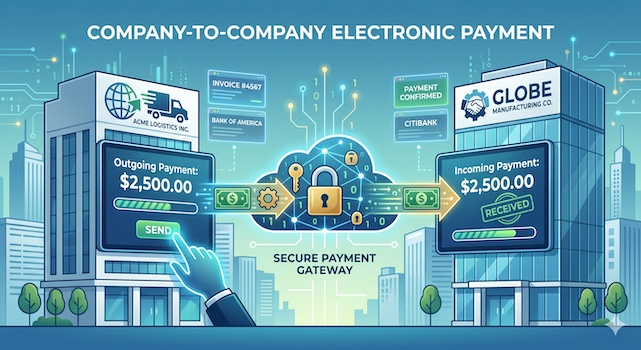
The Digital Shift: How ACH and Electronic Payments Are Reshaping Unclaimed Property
For decades, unclaimed property compliance has been the silent administrative burden of the
corporate world. Traditionally, companies relied heavily on paper checks to fulfill obligations to
vendors, employees, and shareholders. When those checks went uncashed, they inevitably
aged, eventually becoming reportable unclaimed property. However, as the financial landscape
shifts aggressively toward Automated Clearing House (ACH) transfers and digital payment
ecosystems, the nature of this compliance is undergoing a fundamental transformation.
The Erosion of the “Stale-Dated Check”
The primary driver of unclaimed property in most organizations is the uncashed payroll or
accounts payable check. A paper check is an instrument that requires physical action—delivery,
deposit, and processing. If a recipient moves, loses the mail, or forgets to deposit the check, that
funds sit in a state of limbo until the statutory dormancy period expires.
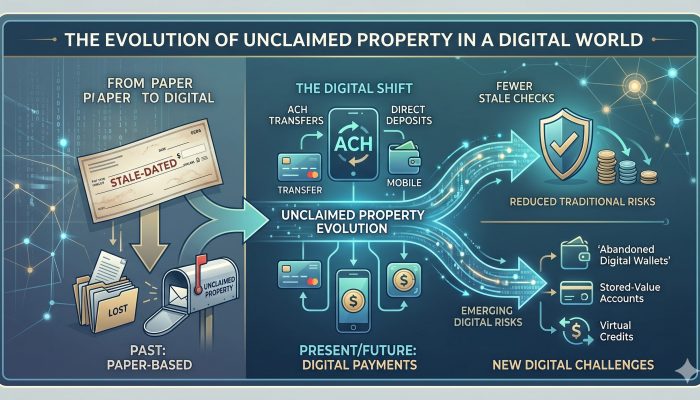
The transition to ACH and direct digital payments effectively eliminates the “stale-dated check”
scenario entirely. Because digital payments are direct deposits, they are settled almost
instantaneously. There is no physical instrument to be lost or ignored. By automating the
payment flow, companies are fundamentally reducing the volume of transactions that have the
potential to become “unclaimed” in the traditional sense.
The Shift to “Account-Based” Risks
While the volume of traditional check-based unclaimed property is shrinking, the move to digital
doesn’t eliminate the risk—it merely migrates it. As organizations transition to digital wallets,
stored-value accounts, and automated disbursement platforms, the definition of “property” is
becoming more complex.
Key Takeaway: The risk shifts from “unnegotiated instruments” to “abandoned digital
credentials or inactive account balances.” If a company holds funds in digital accounts for
customers or vendors who have abandoned their digital profiles, those balances may still
fall under state unclaimed property statutes.
Operational Efficiencies vs. Regulatory Nuance
Moving to digital payments offers massive operational benefits: lower processing costs, faster
reconciliation, and improved cash flow visibility. However, companies must be cautious. State
regulators are keenly aware of the digital shift. They are updating their definitions of “property” to
include digital currency, virtual gift cards, and various electronic credits.
Organizations that believe the move to digital will make their unclaimed property compliance
burden disappear are likely to be surprised during their next audit. While the number of line
items related to paper checks will plummet, the complexity of auditing digital disbursement
platforms can actually increase. Companies must ensure that their digital platforms are
configured to capture and retain the necessary data—such as proof of payment, recipient
contact updates, and “due diligence” outreach—to satisfy state reporting requirements.
Best Practices for the Digital Transition
To navigate this transition successfully, organizations should consider the following:
- Update Due Diligence Protocols: Shift outreach strategies from physical mailers to
digital verification methods, such as confirmation emails or portal alerts. - Data Retention: Ensure systems log every attempt to contact a recipient, as digital
payments don’t always provide the same “audit trail” as a returned paper check. - Monitor State Regulations: Stay informed on how your state’s Unclaimed Property
Division views stored-value balances and dormant digital credits.
The shift to digital payments is a net positive for corporate efficiency. By reducing
reliance on paper checks, companies are effectively curbing one of the most common sources of
unclaimed property. Nevertheless, digital transformation is not a substitute for compliance—it is
an evolution of it. By modernizing their compliance processes alongside their payment systems,
companies can stay ahead of the curve and turn a potential liability into a manageable,
automated asset.
In conclusion, the payment world is moving from physical checks to digital payments. This will be beneficial to companies in the long term, but the current challenge remains. Namely, what to to with more than $70B in current unclaimed property owed to corporations. The recovery issue does not go away, it remains, but just evolves. A proper ongoing method to deal with asset recoveries today will be the basis of continuing to recover tomorrow’s assets.


About Post Author
